

Starting a small business without a plan is like driving to a new city without GPS — you might eventually get there, but you’ll waste a lot of time, money, and energy going in the wrong direction.
The good news? Writing a business plan doesn’t have to be complicated. In this guide, you’ll learn exactly what to include, how to structure it, and why it matters even if you’re a one-person operation.
Why Small Business Owners Skip the Business Plan (And Why That’s a Mistake)
Most small business owners skip the business plan for one of two reasons: they think it’s only for investors, or they think it takes weeks to write.
Neither is true.
A business plan is first and foremost a thinking tool — for you. It forces you to answer the questions you’d otherwise avoid, like: who exactly is your customer, what makes you different from competitors, and how will you actually make money?
Skipping that exercise doesn’t make the questions disappear. It just means you answer them later, under pressure, when the stakes are higher.
What a Business Plan Actually Is (Keep It Simple)
A business plan is a written document that describes what your business does, who it serves, how it operates, and how it makes money.
That’s it.
It doesn’t need to be 40 pages. For most small businesses, 5 to 10 well-thought-out pages is more than enough. What matters is clarity — not length.
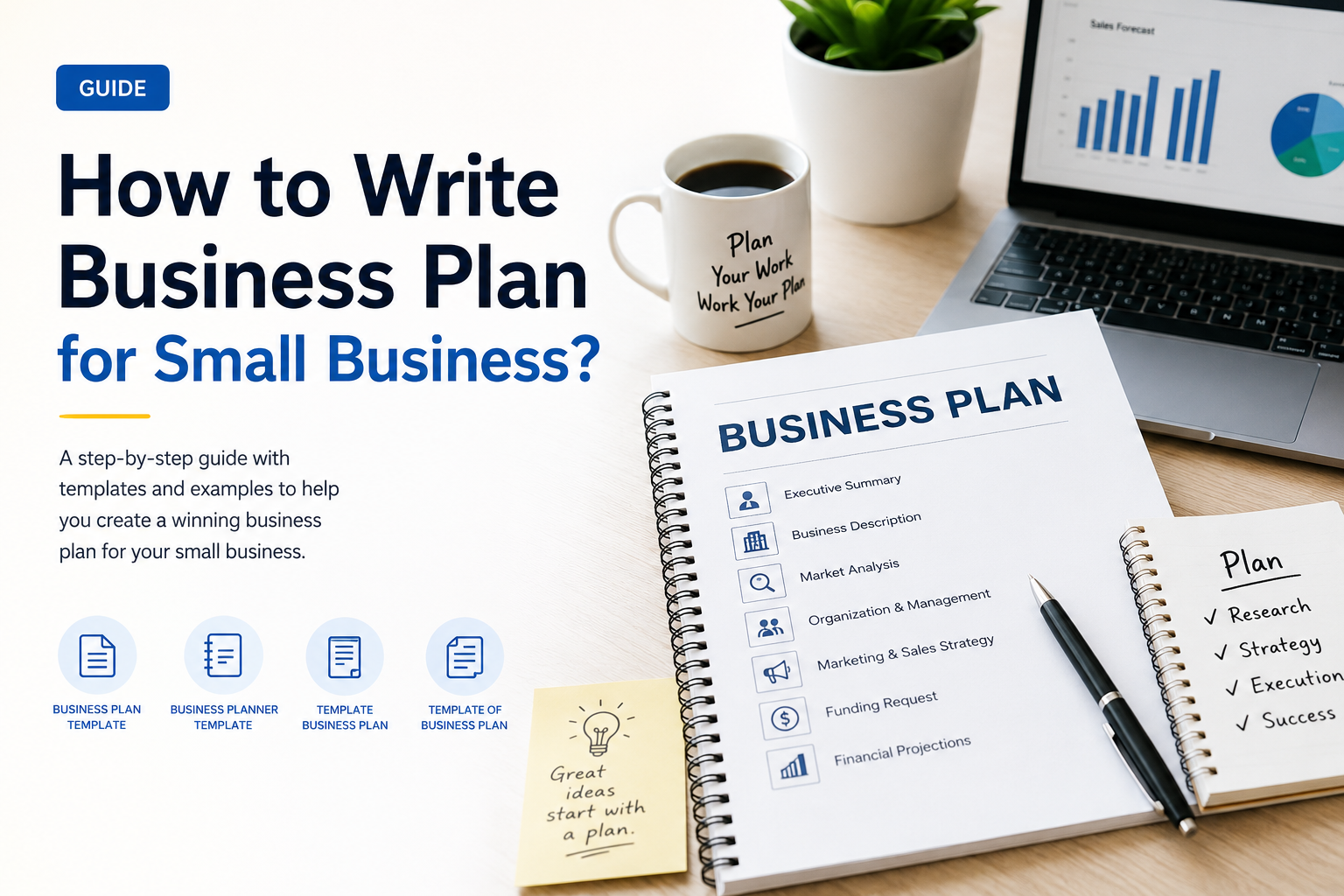
The 7 Core Sections of a Small Business Plan
1. Executive Summary
Write this last, even though it goes first. It’s a 1-page overview of your entire plan: what your business does, who your target market is, and what your main goals are.
Think of it as the elevator pitch version of your business.
2. Business Description
Describe your business in plain language. What product or service do you offer? What problem does it solve? What’s your business model (how do you make money)?
Include your business name, location, legal structure (sole proprietor, LLC, etc.), and the stage you’re at (idea, early revenue, scaling).
3. Market Analysis
Who are your customers? Be specific — not “everyone who wants to start a business” but “first-time online entrepreneurs aged 25–40 who want to generate income without a physical storefront.”
Also research your competitors. What are they offering, what are they missing, and where is the gap you fill?
4. Products and Services
Describe what you’re selling in detail. Focus on the benefit to the customer, not just the features. What does your customer gain by buying from you? What problem disappears?
If you have pricing, include it here.
5. Marketing and Sales Strategy
How will people find you? How will you convert them into paying customers? This section should cover your main marketing channels (social media, SEO, email, etc.), your content approach, and your sales process.
Be honest about what you can realistically execute as a small business — a focused strategy beats a scattered one.
6. Operations Plan
How does the business actually run day to day? Who does what? What tools and platforms do you use? What are your key processes?
For solopreneurs, this section is short — but it matters because it shows you’ve thought through delivery, not just sales.
7. Financial Plan
This is where most people get nervous, but it doesn’t need to be complex. Include:
- Startup costs (what you need to launch)
- Monthly operating costs (what it costs to keep running)
- Revenue projections (realistic estimates for the next 6–12 months)
- Break-even point (how many sales you need to cover costs)
You don’t need an accounting degree. You need honest numbers.
Common Mistakes to Avoid
Being too vague about your target customer. “Small business owners” is not a target market. “First-time e-commerce store owners who are tech-comfortable but have never run ads” is.
Overestimating revenue in the first year. Build two versions: a conservative projection and an optimistic one. Plan based on the conservative one.
Treating the plan as a one-time document. A business plan should evolve as you learn. Review it every quarter and update it based on what’s actually happening.
Skipping the competitive analysis. Understanding your competition doesn’t mean you have to beat everyone — it means you know exactly where you fit and why someone would choose you.
How to Actually Get Started Today
The hardest part of writing a business plan isn’t the writing — it’s staring at a blank page and not knowing where to begin.
The fastest way to get unstuck is to start with a structured template. A good business plan template gives you every section pre-organized, with prompts that guide your thinking instead of leaving you to figure out what to write from scratch.
If you want to skip the blank page and start filling in your actual plan today, this business plan template was built for small business owners and solopreneurs — not for investors or MBA courses. It covers all seven sections above, with clear prompts for each one, so you spend your energy on your business, not on formatting.
Final Thought
A business plan won’t guarantee success. But it dramatically increases the odds — because it forces you to think through the decisions that matter before you’re paying the consequences of getting them wrong.
You don’t need a perfect plan. You need a real one. Start there.
